Poultry Farming for Beginners: Layers and Broilers
On this page
Start with a small flock, buy day-old chicks or started pullets from a reputable hatchery, and decide first whether you want eggs (layers) or meat (broilers). Layers pay slowly over many months; broilers pay fast but need a buyer lined up. Either way, housing, brooding heat, disease prevention and daily records decide whether the flock earns money.
Layers or broilers: which should you raise?
Layers are hens kept for eggs. Broilers are fast-growing meat chickens. The two need different skills and cash flow.
| Layers | Broilers | |
|---|---|---|
| Product | Eggs | Meat |
| Time to first income | Hens begin laying at 18 to 20 weeks | Market age depends on breed and target weight |
| Income pattern | Steady, over many months | One lump sum per batch |
| Main skill | Lighting, nutrition, egg handling | Heat, ventilation, timing the sale |
| Main risk | Production drops from disease or stress | Feed cost grows as birds age |
Layers. A pullet starts laying at 18 to 20 weeks, peaks at about 35 weeks above 90 percent, and holds that peak for about 10 weeks before slowly declining. The average commercial Single Comb White Leghorn lays about 265 eggs a year, and backyard breeds lay fewer (Oregon State University Extension). Day length drives laying: a 14- to 16-hour day of light is typical for keeping hens producing, and a lighting program must not lapse (same source). Plan what to do with hens when production falls.
Broilers. Commercial meat breeds such as Cornish Cross are typically processed around weeks 8 to 9, depending on the weight you want. One hatchery's weekly chart shows daily feed per bird climbing from 0.07 lb in week 1 to about 0.5 lb by weeks 9 to 10 (Myers Poultry). Older, heavier birds eat more every day, so waiting past the target weight costs feed. That is why selling on time matters. Confirm your buyers and price before you order chicks.
Ducks, turkeys and other species have their own needs. Learn chickens first.
Housing, brooding and equipment
Housing protects against predators, weather and disease. It needs ventilation without drafts, dry litter and secure doors.
Brooding heat. Chicks cannot regulate their own temperature. Provide 95°F (35°C) at chick level under the heat source in week one, then cut it by 5°F (about 3°C) per week until it matches the outside temperature. Keep heat lamps at least 20 inches from anything flammable and hang them on a chain or cable (Penn State Extension). Watch the chicks: huddled under the lamp means too cold, scattered at the edges means too hot.
Space. Chicks need more room each week. Penn State gives these allowances:
| Age | Floor space per chick (sq ft) | Feeder space per chick (in) |
|---|---|---|
| Week 1 | 0.25 | 1 |
| Weeks 2-3 | 0.5 | 1.5 |
| Weeks 3-5 | 0.75 | 2 |
| Weeks 5-8 | 1 | 2 |
| 8+ weeks | 1.5 | 3 |
Source: Penn State Extension. For adult birds, one New South Wales education guideline for small flocks suggests 0.5 m2 per bird on deep litter and 2.5 m2 per bird on a grassed run or free range, with one nest box for every three or four hens (NSW Department of Education). Space rules differ by country and by system, so check local welfare guidance and err on the side of more room.
Equipment. You need clean drinkers, feeders sized to the flock, a brooder heat source, nest boxes and perches for layers, and a timer for lights if you keep layers through short days.
Where to buy chicks
Buy from a reputable hatchery, not from mixed-flock markets. Ask about vaccination, expected performance for the breed, and replacement policy for early deaths. Most chicks hatched in North America are vaccinated against Marek's disease, and vaccination is done at the hatchery (UC Agriculture and Natural Resources). Ask any supplier to confirm it.
Daily routine
Good flock keeping is a short checklist done every day:
- Look at the birds. Note anything quiet, huddled, gasping or off feed.
- Refresh water and clean drinkers.
- Check and top up feed. A sudden drop in feed intake is an early warning.
- Collect eggs, at least twice a day if you can, and note broken and floor eggs.
- Check temperature and ventilation.
- Remove dead birds and record each death with a suspected cause.
Weigh a sample of broilers weekly to check they are growing on target.
Disease prevention and health
Prevention is cheaper than treatment. Three habits matter most.
- Quarantine new birds. Keep new and returning birds apart for at least 30 days, as far from the flock as you can (100 feet if possible), and care for them last. Most diseases show up within that window (University of Arkansas Extension).
- Control what enters. Restrict visitors, provide boots or a disinfectant step for anyone entering, wear dedicated footwear yourself, and keep rodents, wild birds and pets out (same source). Where you can, raise one age group at a time and empty and clean the house between batches.
- Vaccinate on local advice. Schedules for Newcastle disease, Gumboro, infectious bronchitis and others vary by country and by local disease pressure. Ask a local poultry vet or extension officer for the schedule rather than copying one from the internet. Our guide to livestock vaccination records covers what to log for each shot.
Early signs of illness, per University of Arkansas Extension: a drop or stop in egg production, lack of appetite, sneezing or gasping, diarrhoea, less water drunk, eye or nose discharge, ruffled feathers and huddling, or a bird keeping to itself. If something looks wrong, call your vet, local extension agent or state veterinary service straight away, and ask about testing any bird that dies unexpectedly (source).
Track production and costs
Numbers show problems before the birds do. For layers, record daily:
- eggs collected, plus broken and floor eggs
- live hens (subtract deaths)
- feed used
Hen-day production is eggs collected divided by live hens, times 100. A healthy flock in peak lay should be above 90 percent (Oregon State, above). A sustained drop is a reason to check feed, water, lighting and health before anything else.
For broilers, track deaths, feed used and sample weights, then calculate feed per kilogram of gain.
Business plan basics
Write the plan before you buy birds.
- Startup costs: housing, brooder, drinkers, feeders, first chicks, feed until the first income, vaccines and medicine, water and power.
- Running costs: feed is usually the largest, then labour, vet, utilities, packaging and transport.
- Revenue: for layers, flock size times laying percentage times egg price; for broilers, birds sold times live weight times price per kilogram.
- Margin: the gap between feed cost and selling price, after deaths, decides profit.
Prices and costs vary widely by country, so use your own local quotes, not averages. Our article on whether livestock farming is profitable shows how to work through the arithmetic. If you plan to sell eggs or birds yourself, read how to sell farm products directly to customers.
Keeping poultry records in Livestock Manager
Paper notes get lost. In Livestock Manager, which runs on iOS, Android and the web (an internet connection is required), you can:
- create each flock or batch and record deaths as they happen
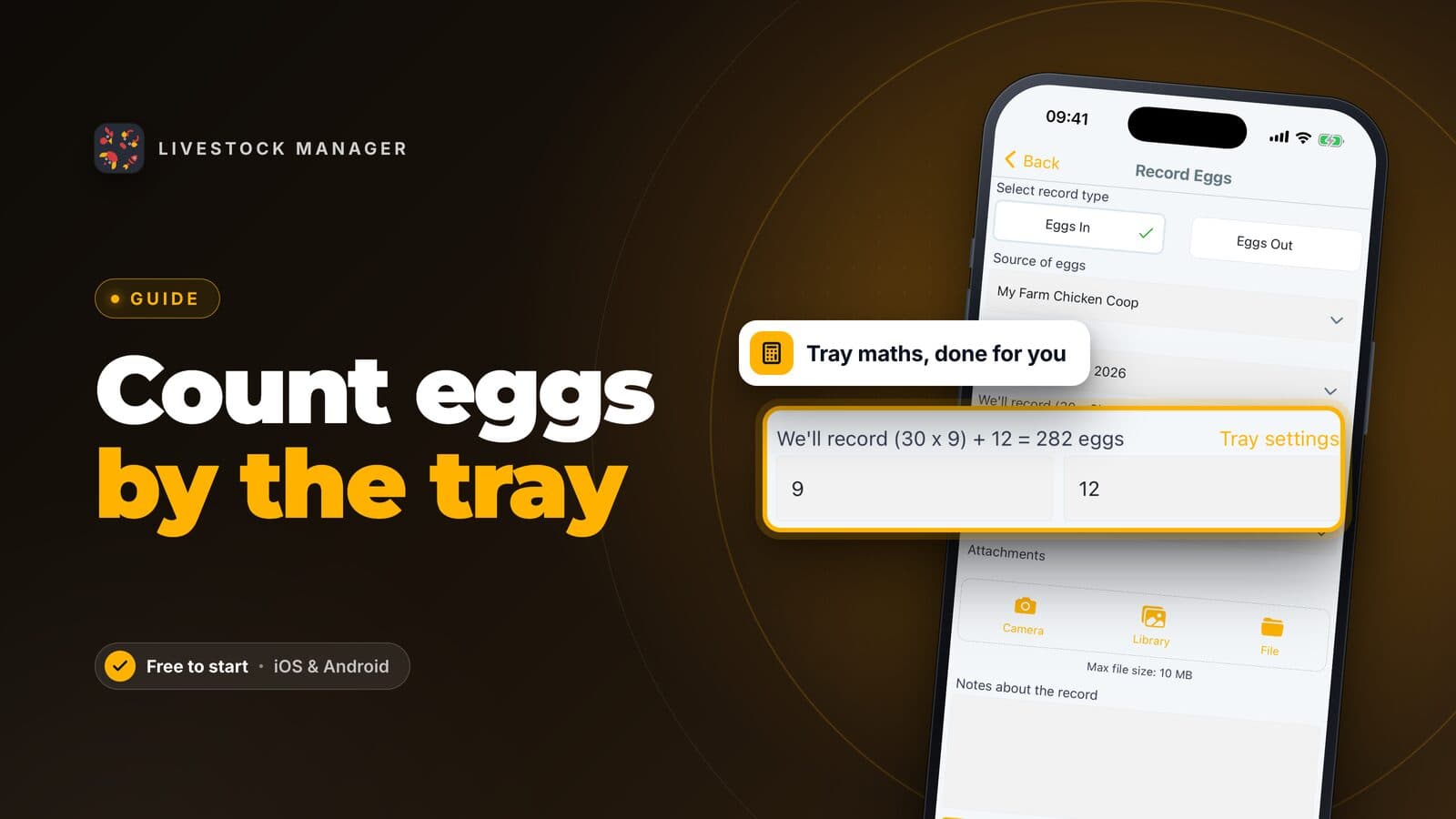
- log daily egg collections and see them over time
- keep a feed store with stock and days left, so you reorder before it runs out
- record vaccinations and treatments in health records, and keep a medicine store with stock, expiry and withdrawal periods
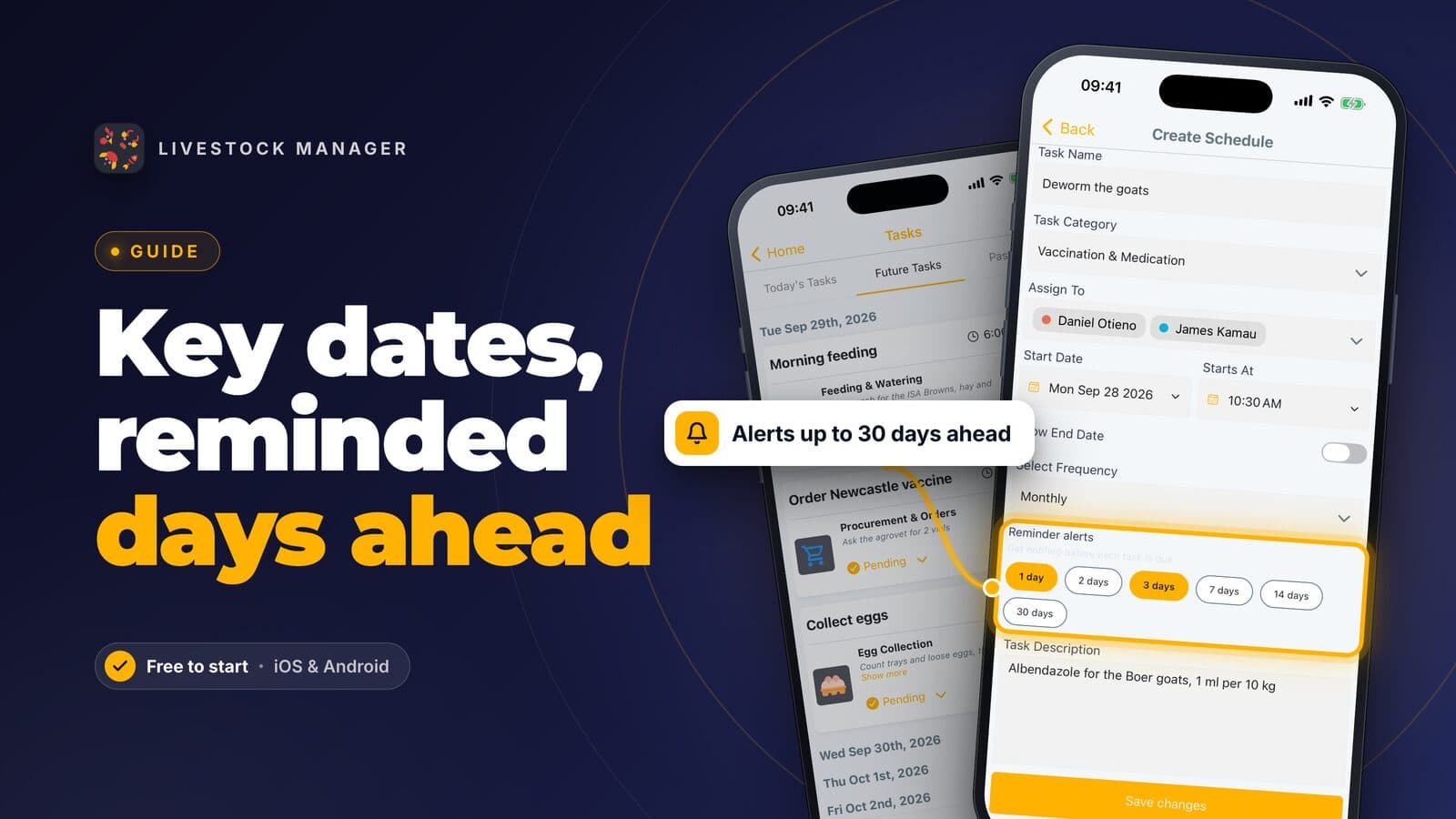
- set tasks and reminders for vaccinations and other jobs
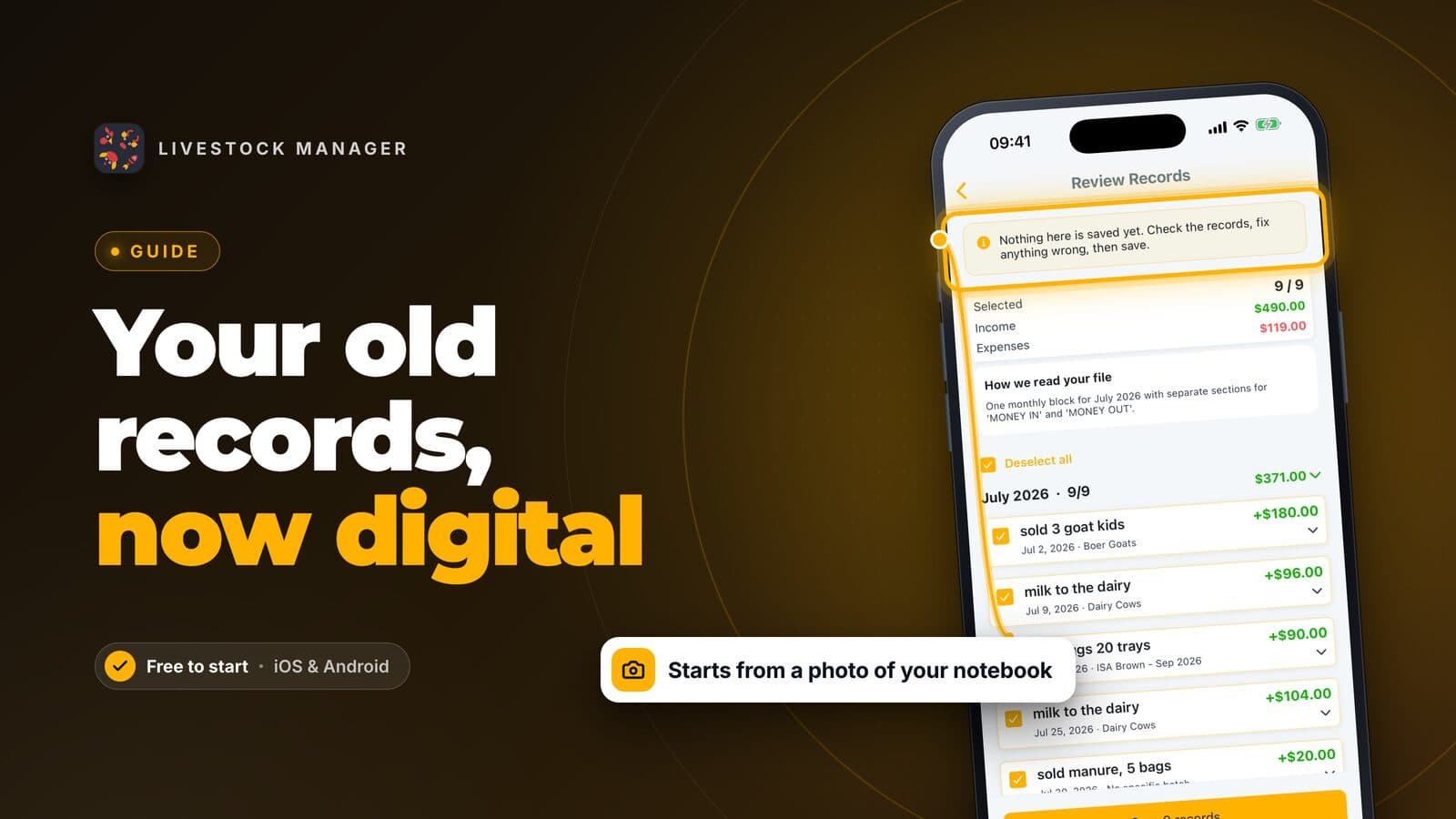
- track income and expenses per flock and download reports as PDF or CSV
There is a free plan. For a wider view of what to record on any farm, see our farm record keeping guide. Comparing species? Our goat farming for beginners guide covers the alternative, and the poultry farm management page describes the poultry tools in more detail.
Tips for your first flock
- Start small. Your first flock is a learning flock.
- Line up a market before you buy birds.
- Do not cut corners on feed or clean water.
- Keep records from day one.
- Join a farmer group or cooperative near you.
- Find a poultry vet before you need one. Follow their advice and local regulations on vaccines and medicines.
FAQ
How long before a new laying hen produces eggs?
A pullet begins laying at 18 to 20 weeks of age and reaches peak production at about 35 weeks, according to Oregon State University Extension. Buy started pullets if you want eggs sooner.
How much space do chickens need?
Chicks need about 0.25 sq ft each in week one, rising to 1.5 sq ft by eight weeks, per Penn State Extension. Adult hens need more, and guidance varies by system, so check local welfare rules and give more room than the minimum.
How long should I quarantine new birds?
The University of Arkansas Extension poultry veterinarian advises at least 30 days, kept as far from your flock as possible (100 feet if you can). Care for the quarantined birds last.
Which vaccines does a beginner flock need?
Schedules depend on your country and the diseases near you, so ask a local poultry vet. Most chicks from a hatchery already have the Marek's disease vaccine, so ask your supplier to confirm.
What records should a new poultry farmer keep?
Record eggs collected, deaths, feed used, treatments and vaccinations, and every sale and expense, per flock. These numbers show whether the flock is healthy and profitable.